I’m a big believer in the Pareto Principle (The 80/20 Rule) which says that 20% of your effort brings you 80% of your results. Learn why i think WordPress Is Classic 80/20
I think using WordPress is a classic case of this principle when developing a website.
If you spend 20% of your website design and development effort on selecting WordPress and using the community that surrounds it, you will get 80% of what is needed to build a website with minimum effort.
Web Design
You don;t need go be a graphical design guru to have an amazing looking WordPress site.
You don’t need to hire the same person described above and their expensive price tag.
All you need is a few tens of dollars investment in a great looking premium theme. Install it and configure it and hey presto a cool looking site. 20% of effort goes on finding a theme rather than developing and designing it.
Web Development
If you have a functional need for your website, 9 times out of 10 there is a plugin to fix your problem.
Why code up a solution yourself when the WordPress community has already done it for you. If you spend a little bit of effort researching and testing plugins it takes away the need to custom code for most website problems you will encounter.
Training & Support
First up WordPress is pretty intuitive even to a none technical person. If you can use a word processor you can add new content to a WordPress site.
There is a huge community out there supporting and supplying training ans support on WordPress, much of it completely free.
A quick google and you can find a training video on youtube or a support request which will solve your problem.
Because WordPress is so widely used, there is a good chance somone has created a documented soluttion to your problem.
Compatibility
This used to be a huge issue on the early days of the web, but since about 17% of the web is made of WordPress, everyone is clamouring to make their services and products compatible with WordPress not the other way around.
Future Proof
Ill not stick my neck out tooooo far, but I can say with a certain level of confidence that WordPress will be around for some time.
The investment you make in building a website on WordPress is not one that will disappear over night, it will return that time and money investment for years to come.
What About The 80%
Ah, that’s where we come in, the 80% is where you need technical skills, know how to code in php or understand mysql.
Rather than tackling the 80% of effort that goes into build a wordpress site why not outsource it to us to do it for you and you have the best of both worlds.
We have a great range of WordPress maintenance packages or we can provide a quote for a one off project.
In this post I want to list the 9 things you should consider when developing your multi language
Why Are You Going Multilanguage?
Sometimes it’s a no brainer, you are forced to host multiple languages by local legislation, I know French Canadian provinces are forced to be bilingual, UK based government sites are obliged to host English and Welsh.
You may want to break into a new territory and need to support their local language, great but are people coming to your site from those countries already, are they consuming your content in the current languages?
I always suggest you dig into your analytics and see where people are coming from before you invest in multiple languages. I;ve written a post in this called Which Languages Do You Need.
It is not cheap to build and maintain a multi language site, do you really need multiple languages or will one do? Which leads me to …
Costs
You need to take into consideration the additional costs involved with multi language.
You will need translators to make your contents available (this is ongoing of course) specialist multi language web development {and potentially more powerful and costly hosting to deal with the bigger website.
These all costs more than a single language site.
Database
Will you current database config support multiple languages, in particular double character languages such as Chinese. These are known to cause database problems if not configured correctly from the start.
I’ve worked on a number of projects where these characters don’t display and come up as a string of ?????????????? It is a real pain to reverse engineer a database setup, do this at the outset, before there is content.
Here’s a quick test, go to Google translate and select all languages you intend to support enter “hello world” in your current language and cut and paste all the translations into your current site. Do they display, yes, then you are okay, if not you need to look at your database collation setup.
Performance
As you add the complexity of multiple languages you need to be sure your current website hosting has enough “oomph!” to support multiple languages and all the coding required to switch between and maintain that content.
As you add a language, your site doubles I size overnight and most people go for multiple languages which means triples or quadruples your hosting requirement.
Design
This is a huge consideration most people never think about, they assume their current website design will work in foreign languages. I’m here to tell you that is not correct. Here are just some areas you need to consider:
Design for expansive languages I’m thinking German in particular, your neat navigation design may not fit when you populate it in German
Left to right / right to left languages, will your design work with Arabic or Hebrew when people read right to left, are your call to action buttons positioned optimally?
Cultural differences, will you colour selection work in another country, are you using symbology that won’t work; Red Cross versus Red Crescent for Islamic countries.
Have you designed a widget to allow site visitors to select their desired languages and is it obvious, there is no point creating a link that says Japanese when all they can read is 日本人.
Multi language design is a huge topic and I will be writing much more in future posts, but here are some great resources to get you started
You shiny new site starts generating leads from customers who don’t speak your native language can you fulfil their needs?
Do you have multi lingual customer support agents, are your products translated, can you handle emails in French?
If not it is very important to set customer expectations, personally I conduct all business in English even though I have translations and I spell that out to potential clients.
Ads And Banners And Downloads Oh My!
It’s not just your website copy you need to think about. Have you translated the following:
Are images containing text translated
Are your downloadable PDFs translated
Have you setup multiple languge ad banners and pay per click campaigns? Why spend money on a multi language site when you are not driving people there with ads in their own languages.
Ecommerce Multilingual Languages And Currency
If you are courteous enough to translate your site into multiple languages are you also going the final fews yards / metres to also offer your products in multiple currencies?
If you are making people feel confident in your products and services why not remove the final barrier to entry of exchange rates.
Last But By No Means Least Translations
Tell me you are not relying on Google translate!
Unless you have good in house language skills you are going to need a good translator.
Let me reiterate a good translator, having a couple of years of French at high school does not give you the skills to write business copy that converts. This is an investment you should look into.
Another thing to note is that subject matter skill are also crucial. If you have technical content can an everyday translator handle complex technical translation? As an example as a computer “techie” I might talk about object orientation, but would the translator think I’m talking about landscape versus portrait which is something completely different.
I sub contract all translation work to I CanLocalize, they have a large team of freelance translators, check them out.
Wrap Up
This was a very quick list post to highlight the issues you should be aware of before you start a multi language build.
I was thinking about running a free live webinar to go into more depth about these issues, if that is of interest let me know by leaving a comment if I get enough feedback I’ll run the live event.
Photo Credit: Môsieur J. [version 9.1] via Compfightcc
I’ve been contacted by clients a couple of times over the past month about spam user registrations on their sites. This post will show you how to stop spam registrations on WordPress in two seconds flat.
They are getting hundreds of spam user registrations on their site, and are seeing increasing amounts of spam comments. They then have to delete these users and the spam, it’s a time suck and pain for the site owner. They are concerned this is some type of hack attack.
Here is a 2 second fix to stop spammers registering users on your site.
What They Do
The spammer will use scripts to search for sites that have open user registrations. Then using more scripts they add new users to your site.
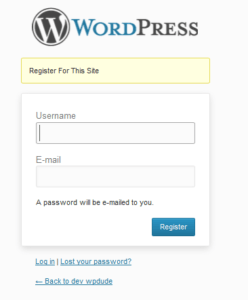
You can check if you site is open to user registrations by going to this URL
http://yoursite.com/wp-login.php?action=register
If registrations are open you will see:
click for full size image
If they are closed you will see:
click for full size image
Why Do They Do This
Some sites set their comments to auto approve from registered users, this means that spam links can be added to comments and made live without moderation. This then increases people search engine rankings.
If you think this is an automated process you can see how thousands of links can be generated and rankings increased for suspect sites.
It’s not a malicious attack against your site, rather it is spammers trying ot game google and increase ranking for their shoddy wares. It’s also a pain in the a!se to clean up spam registrations.
How To Close it Down
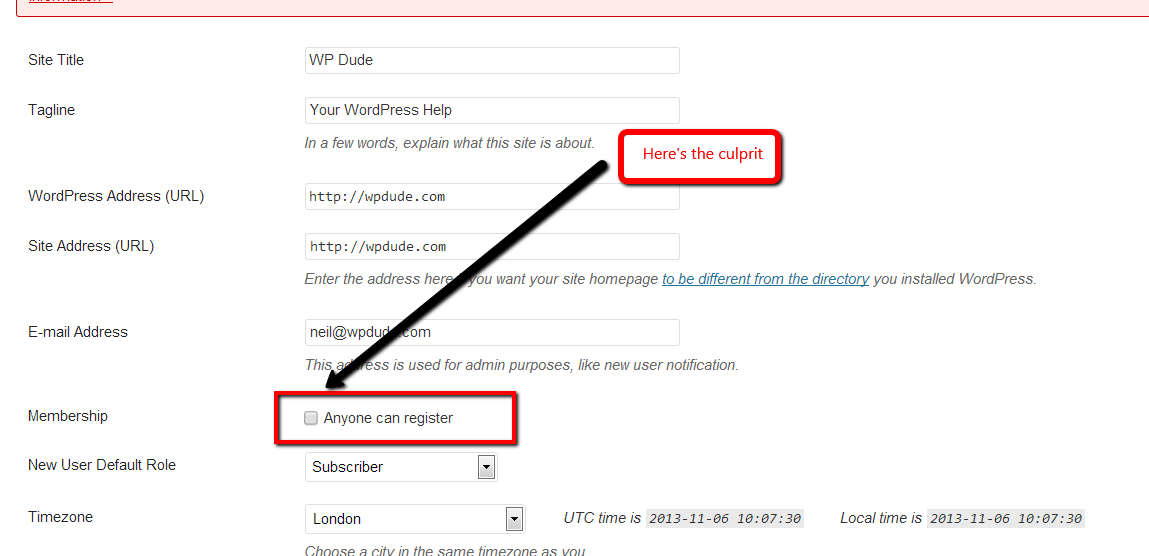
This is very, very technical, go to settings -> general and un-check this box
click for full size images
Unless you have a site that required registration for memberships or email plugins there is no real need to keep this open, please check with your plugin documentation to see if you need this to be enabled.
We are of course available to hire for this complex procedure
Please Tell Me It’s Not Set To Admin
I have seen certain WordPress sites that have registrations enabled and the default user setting are administrators. This leaves your site wide open to hackers using the same techniques, and I have seen sites hacked because they have not closed this simple loophole.
Wrap Up
Unless you have a very real need to keep user registrations open I always recommend closing this function down to keep the spammers at bay.
I get called in a lot to fixed hacked sites. Here is An Open Letter To Hosting Companies Of Hacked Site Owners
I loath something almost as much as the hackers that perpetrated the crime and that is the way hosting companies treat people with hacked sites.
Here’s an open letter to all stroppy hosting companies out there from the point of view of a normal site owner who has been hacked.
Dear Hosting Company
Thank you for suspending my account after I was hacked,that is really helpful way to make me feel special. You are taking my site down, I’m losing business and you are making me feel like I’m the bad person.
I of course did not ask the hackers to attack my site so thank you for the threatening email saying you are going to kick me out if I don’t fix it immediately.
Thanks for making me jump through technical hoops so many times that I had to hire a techie to make things work again.
Thanks for the interrogation by your representative via Live Chat to make sure everything was fixed. Perhaps you could have helped me to do this. I have no idea what a .htpasswd file it or how to add basic authentication to my webroot.
I was a victim of a hack attack.,
It sucks.
I feel vulnerable
Some unknown fuckwit in cyber space came after me for whatever reason and defiled my site.
Thanks for making me feel even shittier with your emails and accusations.
Oh BTW it was probably due to your poor security that the hacker gained access in the first place. Can I review the access logs, what do you mean no they are private. Can you review the access logs and tell me how the hacker got in …… hello anyone there?
The majority of your customers are none technical. They have a website to market their business or send news to their club. They are not trained in the dark arts of cyber security. They came to you to host their site with the understanding it would be secure.
Thanks again for making a bad situation of teh hack even worse.
Love and Hugs
Your Customer – remember the person that pays to keep the lights on
P.S. Can I have my transfer code so I can go somewhere my business will be appreciated.
An Open Letter To Hosting Companies Of Hacked Site Owners
I work on-line 100% of the time. I never go on-site to fix client issues ( well there was that one time but I doubt I’ll get asked back, they didn’t like my penguin pjs). I’m very comfortable working like this and as a result I often lose site that other people are not as comfortable with this as I am.
I’ve been spending a lot of time thinking how I can bridge that e- gap and help people to feel comfortable working with me online without ever meeting me in person.
It’s A Balancing Act
I don’t have time to “jump on Skype” for a quick call with everyone who requests it, I’ve got clients to service and a team to manage. How can I create an environment of trust and still get my stuff done.
How To Create On-line Comfort
Here are some of the techniques I use to put people at their ease when working with me.
Testimonials
I’ve got a long list of real testimonials from my clients. I’ve added their contact details not just their names so people can reach out and contact my previous clients if they want.
I also use a testimonials plugins that allows me to add head shots linking real people to real client’s faces.
I talked a lot about case studies in my previous posts “The Power Of Case Studies” (wow must get less dramatic with my post naming convention) so I’ll not go into too much detail but having lots of case studies in your site proves you work with clients and that you are legitimate.
Guarantees
Provide guarantees in your sales pages, let people know you will do what you say or give people their money back. Here’s my
Guarantee
“If we cannot solve your problem, we also offer a no fix no fee guarantee and all money will be refunded”
And yes I have had to invoke the guarantee a couple of times, not every problem can be solved.
Don’t ask for too much too soon
Asking people to pull out their credit card and pay up front for an expensive service to a complete stranger is going to be a hard sell. If someone comes to you cold and they see a credit card form that puts a barrier to entry up.
You won’t be asked for any money from me unless we have had a couple of email exchanges.
All I ask from my first exchange with a potential client are details of their problem and their contact details.
It’s like asking for a phone number of someone cute as opposed to asking for … well you know where I’m going with this.
Use A Payment Provider People Trust
Using some random provider over http does not inspire confidence like a provider such as Paypal.
People trust paypal and know they can lodge a complaint and get their money back.
Share The Risk
When I started this caper I used to bill upon completion, this was excellent and my clients loved the feeling of trust, that was until I was stiffed by a couple of scummy people and other clients would delay payments.
Nowadays I share the risk by asking for a deposit and then taking the final payment upon completion to satisfaction, this way we are sharing the financial risk.
Sometimes You gotta Skype
This is the real reason for this post.
Recently I was doing my normal thing raising quotes telling people about my no fix no fee guarantee, this potential ( now current) client commented that it was all too mechanical.
I’d not thought about it in that way this has been tried and tested process for nearly five years.
A five minute call created the feelings of trust and the project was green lighted, sometimes we need to create a physical connection.
I know I said at the top of the article that I don’t have time to jump on Skype with everyone but now I’m encouraging a quick pre-project Skype call with new clients to make sure they are happy working with me and that I’m a real legit business.
I’m doing this with people who are past the tyre kicking stage so I’m giving my time to real potential clients, again it’s a balancing act.
Other Things I Have Done Which Work
A couple of other things I’ve done in the past which work but I’m not doing now for various reasons are:
Talking Head Video
Talking into a video so people can hear your voice and see your face is a great way to make an online connection. People like to look at faces and read body language.
I’ve disabled my talking head video while I split test some other items but I found it increased conversions a lot.
Have A Live Chat Box
Add a live chat box so people can ping you and speak to you real time. This one didn’t really work for me due to time zones, too often people were pinging me from the US when I was offline inthe UK, but if you service local clients this is a great
Wrap Up
The take away point for this post is that you should be bending over backwards to put people at their ease.
Have I missed any tricks, what do you do to increase a feeling of confidence in your potential clients?
One of the big issues facing a site owner who has content in multiple languages, is that they need to ensure they have translated all content into all languages.
Missing or or out of date content reflects badly on you as a site owner. But how do you reconcile content across languages?
Moving Target
Keeping up with your website content is difficult enough if there is only one language; content is deleted, links are broken, new stuff is added and changes are made.
Multiply this by the number of languages you support and it get complicated.
Add on mulitple authors using different languages and the task of ensuring you have all of your content correcct in all of your languages gets exponentially worse.
There are two solutions to this problem:
Manual Reconciliation
You setup some sort of manualy reconcilliation system with check boxes, and auditing to ensure your content is up to date.
For anything above a small website this will be a tedious time consuming process.
If only there were an automatic way to do this …
How I Solve This Problem For My Clients
There is always a plugin is my mantra. When I build client sites, I use a couple of plugins that checks on all content in a website and alerts me if:
New content is added needing translation
The original piece is updated and I’ve not added an update to the other languages
If I’m sending content out to a translation team I can set a deadline and get alerts if the work has not been done on time
The plugin I use are WPML translation management and WPML translation analytics.
They are both part of the WPML suite of plugins, and you need the full premium version to do what I am discussing.
Translation Analytics
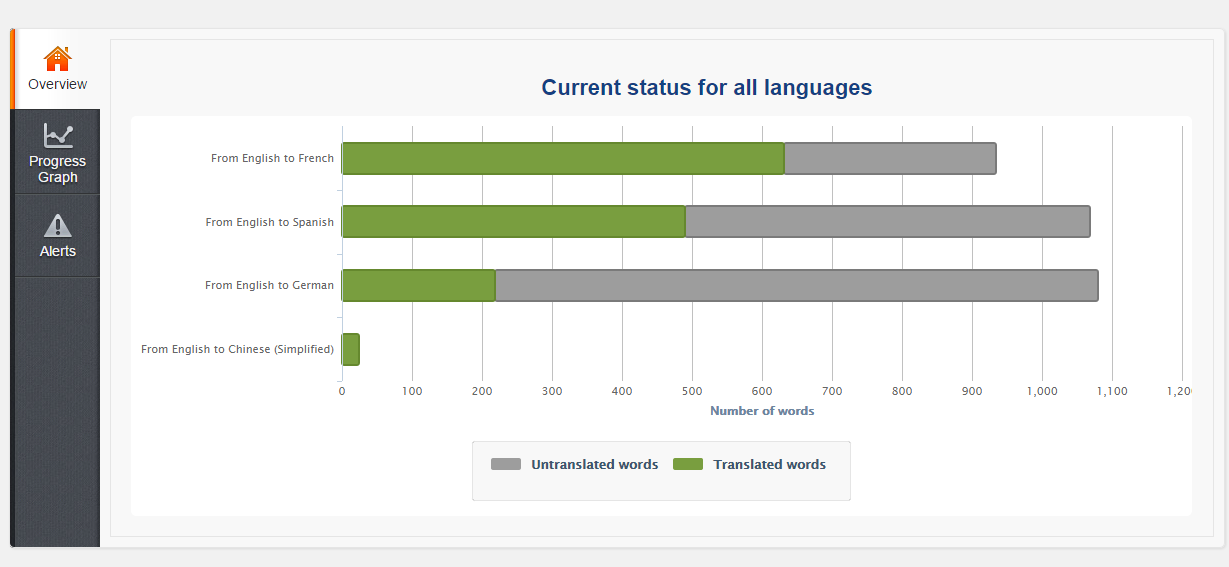
Transltion analytics is a pluign that gives a visual representation of how your translation project is progressing, it shows you
There is also a dealining system built into this pligin so you can set a timescale to compelte your project. This is really useful if you are working with other translators and have a tight timeframe for completion.
Buiklting into the dealining system is also an alertying tool which will let you knoe if uyou are dropping behjing with your translation work
Here is a screen shot from the translation analytic tool. As you can see I’m pretty far behind on my Chinese work.
Click for full size image
Translation Management
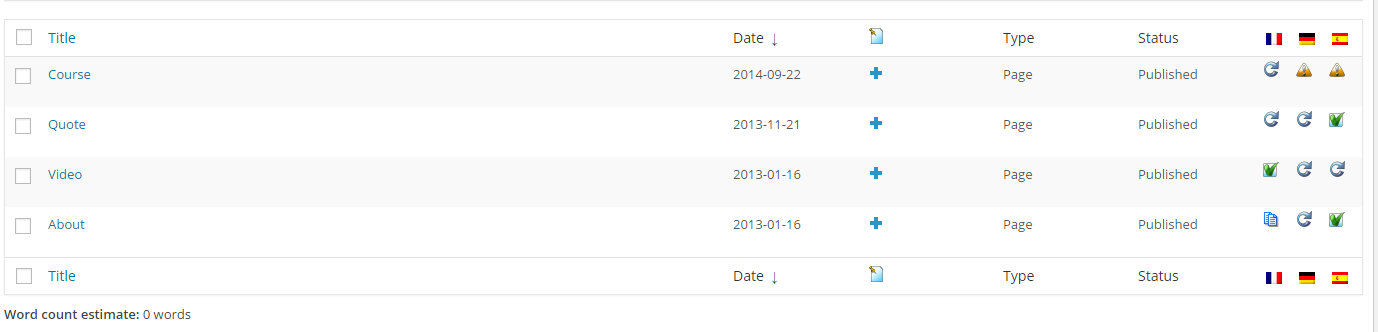
This is my favourite tool for reconcling content, translation managemeent shows you a list of posts pages or other content that needs to be translated or is in need of an update.
Using this I can see where I need to focus my attention and what needs to be translation. here is a screen dump of the managements screen. you can see my pages are in need of some updates and translations
Click for full size image
Wrap Up
Reconciling content across languages is a tricky thing I recommend WPML to automate that process so content doesn’t slip through the cracks of yoru
Disclosure: if you buy a copy of WPML through my link I will receive an affiliate commission.
I love writing case study style blog posts for my business. They are a great way to provide great value to people through helpful content whilst at the same time marketing your business with some great under the radar techniques that don’t come across as pushy sales tactics. let me tell you about The Power Of The Case Study
How I Do Case Studies
I will highlight a particular problem a client has had and write a detailed study on how I fixed it.
My aim is to provide information about my services and a fix to people searching for solutions to their own problems.
Sounds simple but the elegance of the marketing underneath it is often missed.
The Marketing Begins
This is where content meets marketing and stealth selling begins. Not in a sleazy yellow highlighter stylie but in a useful way that can help people to solve their problems.
It Proves I Can Do X
I have performed service X for a client, then I write up a detailed report on how to implement X.
This is definite proof that I have the technical skills to do X and possibly the related task Y that may be in a clients mind.
Social Proof
By writing a case study I am providing social proof about my services. It lets people know:
People have hired me.
People trust me
People consider me an expert at performing that service.
They can see how I work and that I won’t be a nightmare contractor
Assume The Role of Authority
Authority is too often bandied about in my opinion, but the ability to write a decent post about a subject, highlighting how you accomplished a solution will setup you up as an authority or content area specialists in the minds of your reader.
If you can confidently supply a solution in a blog post it means you can definitely supply that solution to a client.
Don’t Be A Douche
It’s very easy to write up a false case study based on the premise of “This is how I would do it if I had any clients” people will see through it.
Write from experience and real client interactions.
Doesn’t This Prevent People Hiring You?
The argument goes, if I open the Kimono won’t everyone then have the solution and not hire me. In short no. People will hire me because
a) They don’t like the look of the effort required to implement the solution from the case study. Perhaps it is too technical or they don’t have the confidence to do it themselves.
b) Are too busy to implement the solution.
c) It’s not something they can do themselves, if an acupuncturist provides a case study on healing migraine by sticking needles in points a -z, you are not rushing to your sewing kit.
Either way people see that I can provide solution X for them and hire me to do it.
Wrap Up – Power Of The Case Study
Get some case studies of the work you have done for your clients and see it turn into business. It’s great none pushy and helpful marketing.
I’m always interested in writing posts about blogging, not just posts about WordPress technical stuff. If you want more content like this leave me a comment and I’ll publish more about marketing with your blog.
In the third part of my series about the regular maintenance tasks you need to perform on your WordPress site, I’m going to talk about optimising your WordPress site (in the UK we optimise never optimize 🙂 ).
See the base of this posts for the other articles in this series.
What Is Optimisation?
Optimisation is my fancy way of saying spring cleaning your WordPress site. During an optimisation process you would clean up your database, any unwanted files, any unwanted comments and remove any unused plugins or themes.
Here are the things I recommend you do every 3-6 months on your WordPress site.
Clear Plugin Tables
If you are anything like me, you are constantly testing new plugins on your site. This is fine, but there is a downside to this, and that is the orphaned database tables that are left over.
Very few plugins are written to remove their data once they are deactivated. As a result lots of tables can be left over creating an overhead on your database.
I recommend you run a plugin garbage collection every few months using this plugin:
Your WordPress database is also creating overhead for itself during it’s day to day work. It add entries to it’s index and creates a working file which can grow in size if not truncated regularly.
If this file grows too big it can have an adverse affect on your site performance. To fix this, I recommend the following plugin, but please remember as with all major database changes,take a backup first and know how to recover that backup.
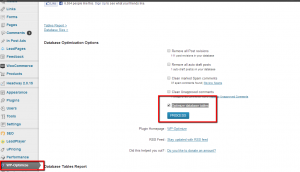
Install and configure this plugin as you would any other plugin and scroll down to the wp-optimize menu.
Select optimize tables (there spelling not mine) and click on process
Click for full size image
I’m going to use this plugin for a number of other optimisation jobs so they can all be batched into one session.
Remove Revision History
WordPress create a revision copy of all posts, pages and custom post types every time you go into edit them. This is great if you want to roll back to a previous version, but not great for database performance. It is holding multiple version of each bit of content on your site.
It’s a good idea to purge post history every few months as it clogs up your database.
Turning back to our good friend wp-optimize, click on remove post revisions and process the queue.
If you have lots of unwanted draft posts you can also do that at the same time with the check box to remove unwanted drafts.
Remove Unused Plugins
During an optimisation it’s a good idea to review your plugin list and remove any unwanted plugins.
First review your list for plugin functionality that you do not use any more and disable those plugins.
Next up, review your plugins for redundant functionality e.g. I see lots of people with SEO plugins install that provide google sitemaps, but they will also have a sitemap plugin installed. Same goes for security plugins, choose one and go with that, it’s not a good idea to install multiple security plugins thinking it will add additional layers of security, often it just causes conflicts.
Disabling plugins frees up memory for the rest of your site to use.
Then delete the plugins to free up disk space, and of course don’t forget to run plugin garbage collection to remove those database tables.
If you have plugins that are not used very often but you still need them, it’s good practise to disable them and only activate them as required, an example is the maintenance mode plugin, which you only need when your site is being worked on.
Remove Unused Theme Files
You can only really use one theme at a time, I recommend you delete any unused theme files to free up disk space.
Word of warning, if you have a child theme, you will also need to have a copy of the parent theme installed, don’t delete that. A good example of this is Genesis, you will need the genesis files and your child theme files to make this work.
Unused Files Can Harbour Malware
Just a note on security (which we will be touching on in the next post). If you have a series of unused themes or plugins installed they could be harbouring out of date code which is vulnerable or infected with malware. Deleting old code is also good security practise.
An example this would be the timthumb script, which allows people to upload malware very easily unless patched. I come across many many sites with old abandoned themes which include this script and can let hackers in. Just because a theme is not active does not mean a theme script cannot be run.
Clear Spam Comments
Many site owners have anti-spam plugins in place, but often they do not clear out the spam.
Just because the comment is spammed, does not mean it has been removed from the database, I can think of four sites that have crashed or have had major performance issues due to huge spam comment backlogs.
A quick spam comment optimise with wp-optimize can save you a few hundred dollars in maintenance charges from a company like mine..
If you have a huge number of spam comments (tens of thousands) sometimes clearing out spam takes a long time and scripts can timeout with a 500 error, if this happens to you, don’t worry simply re-run the scripts and clear them out in batches. Akismet commonly does this for large backlogs.
Check your anti spam plugin, often they will clear out spam automatically for you.
Wrap Up
Optimisation like this doesn’t need to be done as often as backups and standard updates but I do recommend you visit your site every 2-3 months with this in mind.
Anyone who has signed up for our regular WordPress maintenance service gets all of these things done as a matter of course.
It’s a very over used term, but the money is in the list, but how do you do multi language email marketing?
How can you get the Dollars, Euros, Pounds or Yen from your list when the people on it are using multiple languages.
The Sign Up Form
The first port of call is the signup form. Depending upon which provider you use signup forms are a little different. Aweber for example, asks you to embed a script for the form that is designed in their system and cannot be translated, whereas Mailchimp allows you to embed an HTML which can be edited per language.
Either way what I suggest is you create multiple signup forms in the appropriate language then show them in your sidebar or other areas of your site based upon chosen language.
Controlling content in your sidebar is a video post all of it’s own, I’ll create that soon, but using a plugin called widget logic we can set sidebar widgets and signup forms based on language, see this document while you are waiting for my video post:
Following up from sign up, we have the ubiquitous popup. Love them of hate them, they do help to get people onto your mailing list. Does your popup provider allow you to show a particular popup based upon location?
I did some research on this and it looks like only Pippity has the tools to check for URL strings and popup dependant upon language, Using their power filters functionality we could check for a language string in a URL e.g. /fr/ and show a popup based on that.
We would create multiple popups in different languages and show them based on language strings.
The Lead Magnet
The lead magnet is that little carrot at the end of a stick to make people join your list.
It could be an eb0ok, video series, email course, the list goes on. Have you made a promise in language A only to deliver a lead magnet that they cannot read or understand in language b?
Perhaps you could offer multiple downloads or control the lead magnet download based upon the popup or sign-up form you show above.
The Messages
The real problem with email marketing across languages are the email messages you send out to your list. How are you going to ensure people get your marketing messages in the language they selected?
There are two solutions to this problem, you can segment a single list into language or you can create multiple lists one per language.
Segmentation
Segmenting your email list is when you divide your list as a whole into groups of email addresses that are interested in different things. One way to segment is via language. Segmenting is like adding a tag to each of your email signups to put them into a group, you can then send out email messages to these groups.
Most email providers like Aweber or Mailchimp allow you to embed hidden fields in the signup forms which allow us to segment people at signup, one of these fields could be language.
Once segmented you can create multiple emails for that list and end the French version to the French segment, German to the Deutsch segment etc.
The downside of segmentation is that many features such as initial emails, redirect pages etc are limited to one setting per list, which makes me think it’s better to run …
Multiple Lists
A better way to segment your email subscribers is with multiple lists.
Instead of one big list, have multiple smaller but dedicated lists per language. This ensures all autoresponders, welcome emails, redirect pages and email templates are in the correct language.
You can control how people join lists from the signup form, If you display a different signup form that links to dedicated language lists you can be sure that someone from language X gets their content and responses in that language.
Often Forgotten
Each email list has a number of forgotten areas that may need a revisit if you go multi language.
The auto responder sequence you set-up years ago, what language is it in?
The unsubscribe links at the bottom of your emails is it perfectly clear in every language you support how to get off your list?
Once people join your list, they are often redirected to a page on your website, is this translated, will people know what to expect when they have joined, do they know they need to click the double opt in link?
I highlighted the importance of testing in my recent post Importance Of Testing Across Languages, it couldn’t be more true with your email lists, join each list or segment, test the emails and responses you get at each step, stay on your lists so you can test what is being sent out over time.
End Note
The money is in the list, but you need to know how to speak to your list members using their desired language?
Something happened on my own site here at Web Polyglot, that has highlighted the importance of testing across languages as you initially build your site and as you apply changes over time.
The Angry Spaniard And The Missing Contact Form
I got a very angry email from a Spanish chap because there was no contact form on the Spanish version of my quotation page . A complete stranger felt the need to tear me a new one because he was unable to get a quote from me.
What I learned from this is that people are very territorial about their language choice and if your site is under performing in their language you are going to annoy them and miss sales.
Imagine you had a single language site and it did not work correctly, what sort of message is that sending to your potential clients or customers, it’s exactly the same if, when, someone clicks over to another language and they find missing content and or functionality missing or not working.
It makes them think they were a secondary thought tagged onto the main site, not a real concern of the business.
Invisibility Of Secondary Languages
It is very easy to miss changes on secondary languages if you don’t speak or read that language yourself.
We think once the site is built that is it, we don’t need to check the other languages but you are wrong, a website is an ever evolving thing, new content is added, new marketing techniques and social media platforms arise requiring changes.
I know exactly what happened, I was translating my contact form and forgot to re-add the new form on all pages. School boy error!
If, as I am, you concentrate on one language, the others become invisible, ask yourself when was the last time I flipped the language switch and tested my site?
Website Audit
On the back of this I’m running a details website audit to ensure I have multi language compatibility across my site, and this is something I suggest you do also to make sure you have not missed anything.
I’ve created a list of pages and posts and website functions, I’m going to manually test each one and tick it off my list.
Wrap Up
Treat your secondary languages as well or better than your main language, ensure everything is working correctly and test test test as you add new functionality.
In the second part of my series about the regular maintenance tasks you need to perform on your WordPress site, I’m going to talk about applying updates to WordPress, plugins and themes.
See the base of this posts for the other posts in this series.
Why Does WordPress Have So Many Updates?
The quick answer is it doesn’t, the core WordPress files are only updated a few times a year on a regular release program, the only interim fixes that need to be applied are security updates.
The update problem is due to the brilliant eco system around WordPress that allows developers to extend WordPress with plugins and theme. The majority of sites I work with have 10 or more plugins, this code needs to bd patched and fixed on a regular basis.
Why Do We Need Updates
WordPress and it’s related plugins and themes are in a constant state of development. New features are being added, fixes to bug are being released and most importantly of all patches to security loop holes are discovered and
We need to keep up with updates to ensure your site is secure, bug free and lastly to take advantage of new functionality that has been added.
My preferred Way To Apply Updates
This is the method I use before applying updates
Full backup of site
Disable all plugins
Enable default theme
Update core
Update plugins where applicable
Updates theme if applicable
Re-activate plugins
Re-active theme
Rather than get into too much detail, here is a video to show you the process
[leadplayer_vid id=”5229A6F939930″]
Updates Do Cause Problems
Because the developers or plugins, themes and WordPress core cannot test every permutation of installs there are sometimes issues after an update, so there are some cases when you need to roll back to previous versions of code. This is when your backup comes into play and your knowledge of how to recover from your archive.
The “white screen of death” is a common problem after updates, WordPress crashes out and you cannot login until you deactivate your plugins or theme that is causing the problem.
A Word Of Caution
If you have made changes to your plugins or themes, when you apply updates those changes will be overwritten
In the next post in this series I will talk about the often overlooked maintenance task of optimisation and clear outs of unused files and database content/
Need Help?
We are now offering an ongoing WordPress maintenance package. As we go through this series of posts you will see that the maintenance tasks required to keep your site running smoothly do take up a lot of time, we can do that for you and free up that time to work on your website not in it updating and managing code.
In this series of posts I want to talk about the regular maintenance tasks you need to do as a WordPress site owner.
Maintenance tasks are often the dull and repetitive stuff that doesn’t really propel your business forward but are a MUST of you want a healthy WordPress site to serve your customers or readers.
In this post I’m going to talk about THE most important thing you need to do; backup your site.
You Are Taking Backups Aren’t You?
All too often I will work with clients who have had major issues with their site, and I ask them do you have a backup.
The answer is often:
“No, but I’ll check with my hosting company”.
It will go quiet for a couple of days and they will come back to tell me that the hosting company said backup was my responsibility and there was no backup, pleading in their voice:
“Can you fix it Neil?”
Most often I can (I’m pretty mega like that) but sometimes nothing can be done without a good backup.
There are a few good hosting companies that will backup your site but the majority do not. You need to setup your own backups.
You Are Only As Good As Your Last Backup!
When I was working in corporate IT, that used to be the mantra of an old boss of mine, and I 100% agree, but lets paraphrase it a little
Your blog is only as good as it’s last backup.
Think about all the hard work you have put into posts and pages, think about the money spent on custom coding and plugins. Think about the links and comments made.
If you don’t have a backup all of that effort and expense can go in an instant.
What Needs To Be Backed Up?
There are two areas of a WordPress site that need backup attention
1) WordPress database – this contains all your content; posts, pages, comments, tags, categories etc, along with all dynamic data such as what plugins are installed which theme are you using, what are your user details and much more.
2) File system – these are the files you upload to make your site work, including WordPress core script files, themes, plugins and uploaded data like images, video, pdfs etc.
Both Need to be backed up to have a full and complete archive. Many people think they have a backup but they only have a database backup.
How Often Should I backup?
I recommend a daily database backup and a weekly full backup of everything.
If you have a catastrophic failure, you can recover all your posts and pages and in a worst case scenario you will loose one week of updated plugins themes and uploaded items.
Off Site Backups
In the good old days of the nineties when I was a wage slave in corporate IT departments we used to backup everything to magnetic tape, then pack those tapes up in a strong box and send them offiste to a data storage facility.
We kept backups offsite so we had a copy of our data away from the data centre just in case the was a fire or disaster where the tapes were kept.
There is no need to go to these lengths for a WordPress site, but modern services like Amazon S3 or Dropbox allow us to copy our backup archive and automatically keep it off site just in case there is a hardware failure at your hosting company and your archives are unavailable.
Know How To Recover
This is the next problem, people have multiple backup archives but have no idea how to extract the appropriate scripts files and recover their site.
It’s beyond the scope of this posts to talk about recovery, but check with your backup system to understand how to recover your database and file system from an archive.
Test Your Archives
Here’s something no-one does , and that is validate your archives.
You may have setup a plugin to take backups, but do you occasionally select and archive, open it make sure it uncompress correctly and inspect the contents to make sure it contains the data and files you need?
When it comes time to recover there is nothing like the sinking feeling when you realised the backup archive has nothing in it.
Backup Plugins
There are some great backup plugins out there, my favourite is BackwpUp, click on the previous link to see my review of that plugin.
These plugins create regular scheduled backups to ensure you have a backup, they allow file system and database backup and they will allow you to create an offiste backup too, so all of hte above points are covered. The only downside is that you need some technical skills to do the recovery.
Need A Nightmare Story?
A client’s son was building a blog, needless to say he had no backup. The hosting company he was using went bust and the hardware was repossessed to pay creditors.
Three years of his young son’s blogging work was gone in an instant. If he had a backup this could have been ported to a new hosting company.
Nothing like a nightmare scenario to make you think about backups;
Next Up
Next up we are going to talk about regular updates to WordPress core files, themes and plugins.